
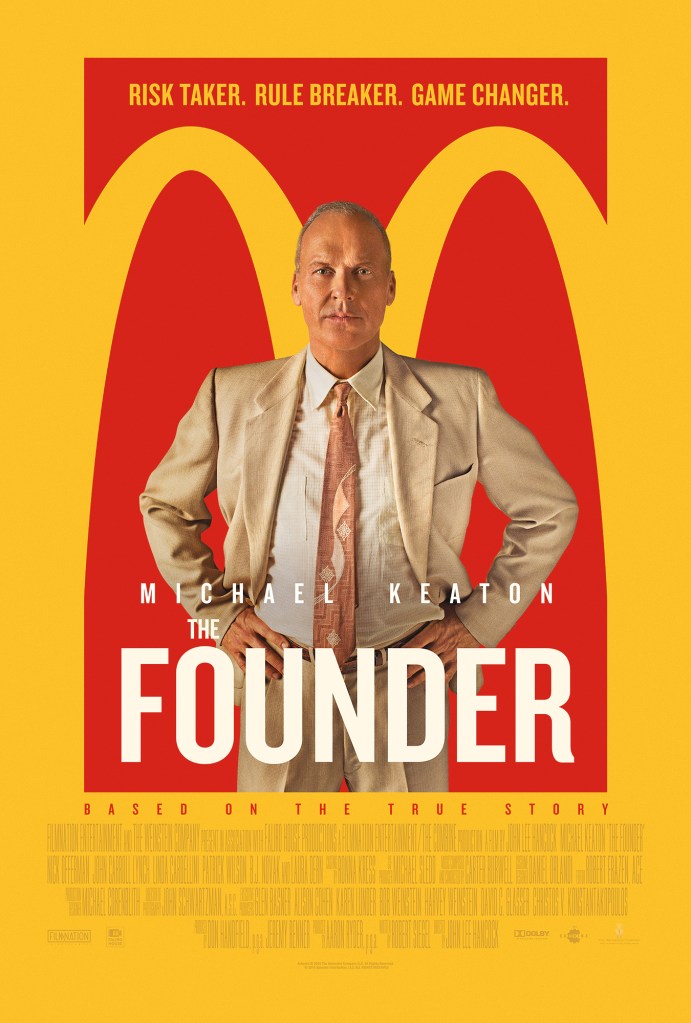
What business are you really in? It’s a simple question, but one for me separates industry leaders from the rest. Years ago, when Ray Kroc, in the movie the Founder was asked this, he didn’t say he was in the “food business”—he said he was in the “real estate business.”
That insight transformed McDonald’s from a burger chain into a global empire. Kroc understood that McDonald’s profitability wasn’t just about selling fries and Big Macs; it was about owning the land and buildings where franchisees operated. This gave the company an unshakable financial foundation—ensuring revenue from rent, regardless of how individual restaurants performed. More importantly, it allowed McDonald’s to control location strategy, placing its restaurants in prime, high-traffic areas to maximize visibility and footfall.

The Power of Strategic Clarity
McDonald’s has 43,477 restaurants worldwide, up from 41,822 just a year ago. Love them or not, their strategic clarity is undeniable. But it’s not just about being everywhere—it’s about knowing why you should be everywhere. McDonald’s has mastered the art of global reach while maintaining local relevance.

Thinking Global, Acting Global

McDonald’s doesn’t just plant its golden arches in a new market and hope for the best. It adapts—thoughtfully and strategically—to local food habits, religious beliefs, and cultural nuances.
Each region gets a McDonald’s that feels familiar yet distinctly local. In India McDonald’s offers the McAloo Tikki Burger, Maharaja Mac (a chicken-based Big Mac), and Masala Wedges. Too delicious, to give it a miss.
In the Middle East McDonald’s serves McArabia, a flatbread sandwich, and ensures all meat is halal-certified. In Thailand, Spicier options like Spicy McWings cater to local palates. While McDonald’s uses global campaigns, it also adapts advertising to reflect local languages, traditions, and humor. In China, family values are emphasized in ads, showcasing McDonald’s as a place for family bonding. When in France, the brand leans into a more premium and sophisticated image.
Awesome Store Design
Beyond food, McDonald’s adapts store design to fit local environments.In Japan, McDonald’s restaurants have a sleek, modern aesthetic with an emphasis on efficiency, including self-order kiosks. In Europe, stores often have a café-like ambiance, aligning with the local café culture.In India and the Middle East, some outlets have separate family and single-men sections to accommodate cultural norms.
McDonald’s ability to think globally but act locally is a key reason for its dominance. Other brands looking to expand internationally can learn from this strategy—respect the culture, adapt the product, and stay consistent with brand values.






 pallaviposts.com
Leave a comment